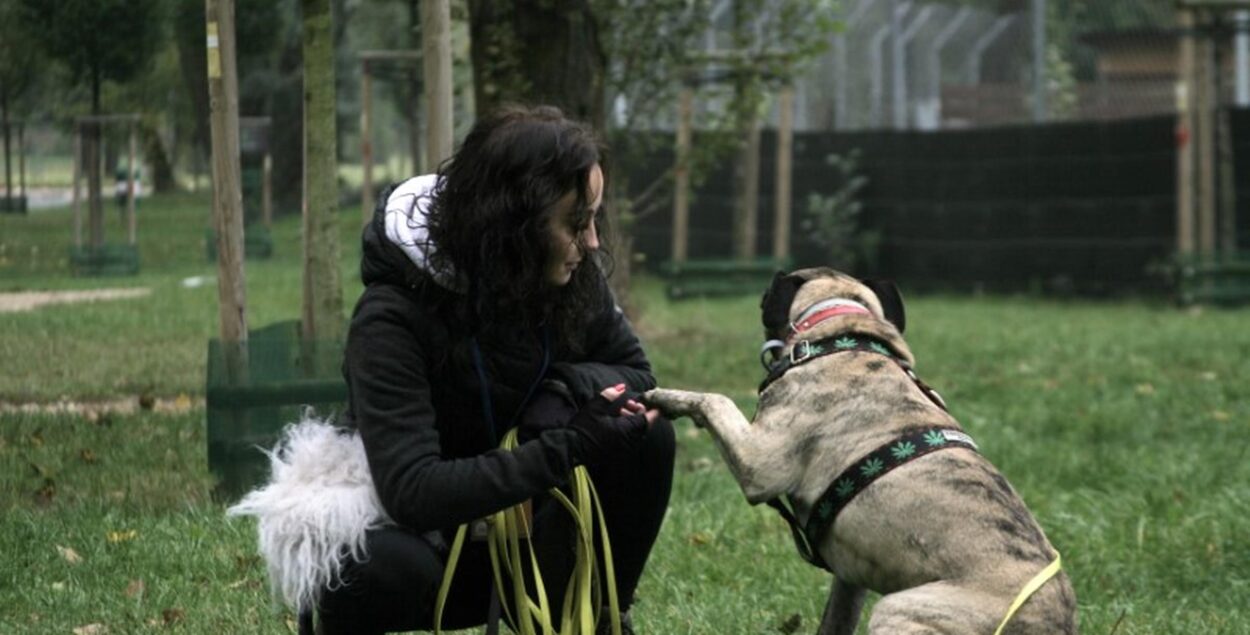
What comes into your mind when you hear ‘4F’? Unless you are ethologists, ecologists, biologists or animal behaviourists, it is probably a sports shop. I am going to disappoint you – I will not be writing about promotions (at least not this time…). We are, of course, talking about survival strategies – fight, flight, freeze and fawn/flirt – which are often discussed in the context of the nervous system’s response to stress and threat. The classic dichotomy of ‘fight or flight’ was first described by Walter Cannon at the beginning of the 20th century. In more recent psychological research, freeze and fawn (in the dog world often referred to as ‘flirt’ or ‘friend’ – from ‘befriend’ –, and in trauma psychology understood as ‘clinging’ or ‘people-pleasing’) are discussed especially in the context of trauma and complex stress responses. In ‘plain human terms’ these mean:
- Fight: confrontation with the threatening factor, most often associated with aggression.
- Flight: an attempt to escape from the threat.
- Freeze: stopping the body immobile, often occurring when other reactions are not possible.
- Fawn: an attempt to please, appease or ingratiate oneself with a perceived aggressor in order to appear non-threatening.
Among others, psychotraumatologist Peter Walker suggested that some people, especially those who experienced trauma in childhood, may develop a response in which they try to ‘appease’ the attacker. Similar behaviours in dogs had been observed and described with various terminology earlier.
5F survival strategies are distinguished in some sources describing other mammals – fight, flight, freeze, fawn, faint. The additional element is so-called ‘playing dead’, something like the well-known and liked opossums from the film Ice Age. Because we rather do not observe fainting in a threatening situation in canines, it will not be discussed.
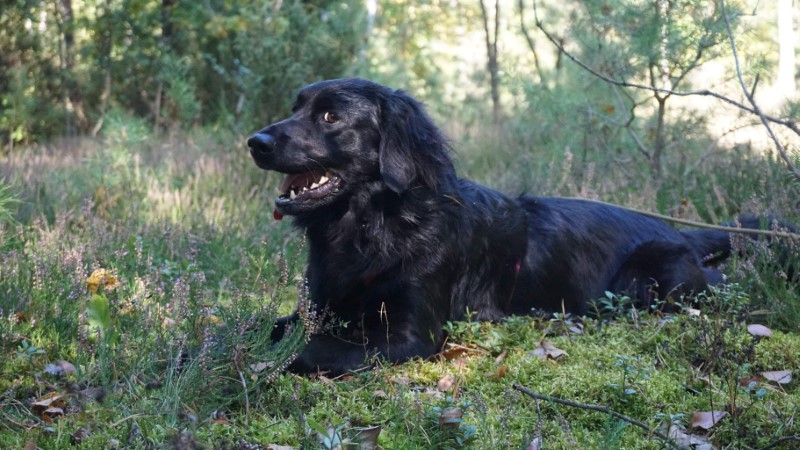
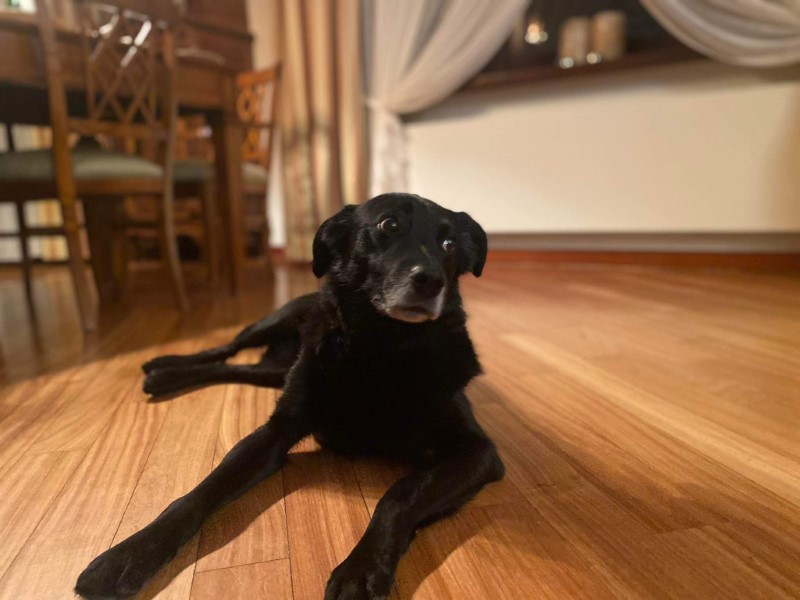
A dog’s survival strategy – 4F
In response to threats, dogs cope in different ways that are based on their instincts and experiences. Their reactions to stress or danger are very similar to those we observe in humans. Animals, like Homo sapiens, when suddenly confronted with a threat, automatically use one of the reactions listed above – the choice is not conscious and we have little influence over it. Through therapy (both behavioural therapy and psychotherapy), we can slightly modify the chain of reactions in a stressful situation when there is at least a moment for conscious assessment.
- Fight:
- When escape is impossible, a dog may choose a defensive response; that is, fight. This can include growling, barking, baring teeth, snapping or biting.
- Flight:
- If a dog perceives a threat but is not able to fight, it may choose to flee. This can be running to a place it considers safe or simply moving away from the threat.
- Freeze:
- In some cases, when a dog is stressed, it may react with characteristic immobilisation. Dogs fall into a state similar to freezing – they avoid eye contact or stare at one point. This may be a reaction to intense fear, pain or terror.
- This phenomenon is often observed in dogs in traumatic situations, for example after bad experiences with people and at moments when the stressor cannot be avoided.
- Fawn:
- Fawn is a strategy in which a dog tries to please a potential aggressor in order to avoid the threat or conflict. In this case, it may be excessively submissive, seek closeness, although in reality it is afraid and does not want to be touched, especially when it feels insecure or threatened.
- It often occurs after traumatic experiences.
Understanding these reactions is essential, especially in working with dogs that have experienced trauma, or in cases of dogs with special behavioural needs. Dogs use one of the 4Fs depending on their temperament and experiences. Breed predispositions also have an influence, which you will learn more about in previous articles.
Fight
We all more or less know what aggressive behaviours dogs can display, and the species ethogram is a topic for a separate article. I would like to emphasise, however, that in this case, we are talking about so-called fear aggression, which is a response to a (real or perceived) threat to health and/or life. It is often an automatism, a factory setting of a given nervous system, so it is neither a fault nor a deliberate action. For this reason, punishing a dog in such situations is not only pointless but downright cruel, and most importantly harmful in an educational sense, because it only intensifies the fear that the stressed dog is experiencing and, as a result, reinforces its sense of the need to literally ‘fight for its life’, increasing aggression and creating a vicious cycle that might have tragic consequences.
But, before you wave it away thinking that this is obvious, think about the fact that it may not always be obvious to you what is stressing your dog. From a human perspective, the situation the dog is in may be completely ordinary and everyday. But in a dog’s mind, it can be terrifying. Most dogs usually attack out of fear, hoping that the source of the threat will disappear, but many people interpret such behaviours as attempts at domination (let me remind you – the theory of a pet dominating its human has long been scientifically debunked!) or groundless aggression.
For example, a dog sitting in a small room with almost strangers may feel defenceless and cornered when a small alien making high-pitched sounds and performing unpredictable movements approaches it. The owner, instead of noticing the first signs of stress in their pet, sees a cute scene – the child of friends who have come to visit is reaching out their hands to Azor as an invitation to play and wants to stroke him. Azor, on the other hand, is experiencing intense stress and sees that increasing the distance from the threat (which in his mind is the unknown child) is not possible, so he chooses the next option – threatening and/or biting to save himself.
To support your friend in stressful situations and provide him with a feeling of relief and thus safety for himself and those around him, it is necessary to temporarily adopt a dog’s perspective and way of seeing the world. This will be much more effective than punishing the dog and trying to force it into human social norms, which is doomed to fail from the outset.
Flight
Now that we know a visit to the vet or an unfamiliar person trying to pet the dog is a moment when we should focus on the dog, because it is experiencing stress and needs our support, it should come as no surprise that the dog sometimes wants to escape to protect itself. If you recognise in your dog a tendency to panic and run blindly, it is worth consulting a behaviourist or animal psychologist, who will guide you towards alternative ways of coping with stress.
Freeze
In consultations with dogs that freeze (literally or emotionally), I often compare such a dog in stillness to a ticking bomb. Freezing in one position, pretending we are not there and not drawing attention to oneself makes it possible to survive in an extremely hostile environment, but it is also mentally taxing. Which strategy a dog that ‘freezes’ (that is, enters a state of immobility or avoids reacting) will choose depends on many factors, but such an individual can be dangerous. This reaction often indicates complete overwhelm. Although freezing does not always mean that a dog will be aggressive (some dogs can spend a significant part of their life in freeze or choose flight), in many cases it can be a sign that the dog feels forced to take action in order to defend itself.
- Reaction to intense stress or fear
- A dog that does not have, or in the past repeatedly did not have, the possibility to flee or fight may stop moving, hoping that the threat will pass. This means that the dog is in a state of strong emotional tension. Unfortunately, in the case of, for example, examination by a veterinary surgeon, this is often mistaken for being well behaved.
- Limitation of warning signals
- Unlike dogs that signal fear, for example by growling, threatening or body stiffness, a dog frozen in immobility may not give such warning signals. People who are not familiar with canine body language may mistake freezing for calmness. This can lead to a situation in which the dog unexpectedly, for a layperson, attacks, because it chooses the next strategy when frustration overwhelms it.
- Reaction to trauma or bad experiences
- Dogs that have been through trauma (for example were badly treated by people or were severely bitten by another dog on a walk) may more often enter a ‘freeze’ state as a defence mechanism. In such cases, the subsequent reaction may be the result of a response to situations reminiscent of those from the past.
How can you recognise a dog in a freeze state?
It is worth paying attention to subtle changes in the dog’s body:
-
- Stopping and remaining motionless.
- Avoiding eye contact: the dog may look away or try to avoid looking into eyes.
- Dropping the ears: tilting or folding the ears towards the body.
- Body stiffness: the dog becomes rigid, freezes in one position.
- Not responding to external stimuli: the dog may ignore its surroundings, focusing only on the threat.
If you notice that a dog is entering a freeze state, it is best to give it space so that it can feel safe. Avoid sudden movements and forcing interaction. If the dog freezes in response to a particular person, situation or activity (for example, the lead in your hands), it is worth checking whether it would be better to change the pattern and minimise the tension the dog is experiencing.
Understanding, empathy and appropriate management of situations that may lead to stress have a huge impact on your comfort and safety.
Fawn
Distinguishing fawn from joy in a dog can be difficult, because both states may be associated with body language that is similar at first glance, such as wagging the tail or seeking touch. However, these two reactions have different emotional bases and motivations that can be seen in the dog’s behaviour. Fawning, appeasing is negatively charged – this strategy consists in presenting oneself as small, sweet, non-threatening and meeting expectations in order to protect oneself from anger and/or violence from a stronger opponent of any species.
If you have previously dealt with so-called people-pleasing in humans, you know what this is about.
Imagine a moment when adult dogs begin to display puppy-like behaviours – lying on their belly, nervously licking their own muzzle or the other dog’s muzzle/a person’s hand or face, moving not so much the tail as the whole body in a way that brings to mind wriggling. These actions are a way of obtaining gentler treatment and although they may resemble a willingness to play, they signal strong psychological tension.
Check our tips to help distinguish these two states:
- Situational context
- A dog that is fawning is usually responding to stressful or unpredictable situations – such as the presence of a person who causes fear or an attempt to avoid a human’s anger. In this case, the dog is usually trying to meet expectations or seek acceptance in order to feel safe, through excessive submissiveness, because it fears what will happen if it does not comply.
- Joy: this is a genuine response to play, the presence of a beloved companion, positive experiences (e.g. food, a walk) or newly discovered toys. Joy is a natural response to something that gives the dog pleasure and is not associated with trying to avoid a threat.
- Body posture
- Coping strategies related to ‘appeasement’ are signalled by a body posture that is more withdrawn, lowered, and ‘submissive’. This may include:
- Lowered body: the dog may approach with its head low and legs bent.
- Avoiding eye contact.
- Excessive submissiveness: in such situations, the dog may respond by adopting body positions that signal submission (e.g., belly‑crawling, exposing its stomach, licking hands or a person’s face).
- Joy: in the case of joy, the dog will be more open, energetic and ‘relaxed’. Typical signs of joy include:
- Wagging the tail enthusiastically, smoothly, not stiffly.
- Free, energetic movements without signs of stiffness.
- Control
- Fawn: uncertainty or attempts to control the situation, even if someone appears to be approaching to stroke them. Out of fear for the future, the dog may avoid resting or relaxing, trying to meet expectations (e.g. allowing touch, staying close) even if it does not feel comfortable and would prefer to move away. This is often the result of fear.
- Joy: in joy, the dog naturally responds to stimuli that give it pleasure. A dog in a joyful state will eagerly engage in play, walks and interactions that bring enjoyment. It will also be more open to new experiences.
- Behaviour in the face of threat
- If the dog feels threatened or uncertain, fawning may appear as attempts to appease the person/animal it fears. The dog may try to establish physical contact to calm the situation, e.g. licking hands, approaching closely, even though it does not feel entirely comfortable.
- Joy does not occur in difficult moments.
- Duration of the reaction
- An unhelpful coping style may be persistent, especially if the dog feels constantly threatened. The dog may enter this state even in everyday situations where it is not fully confident in its position in relation to the caregiver.
- Joy is usually a temporary reaction to specific stimuli, such as play, walks or social interaction. It is a more spontaneous emotion, lasting a short time but clearly visible in the dog’s behaviour.
Understanding these differences can help in better reading a dog’s emotions and responding to its needs. When we see puppy-like behaviours in our adult dog, we should consider whether it is an attempt to avoid an anticipated conflict and whether our relationship is sufficiently good and safe. It is important not to confuse these two states, because fawning is the result of fear, is emotionally taxing, and in the long term can lead to deterioration of the human–dog relationship and behavioural problems.

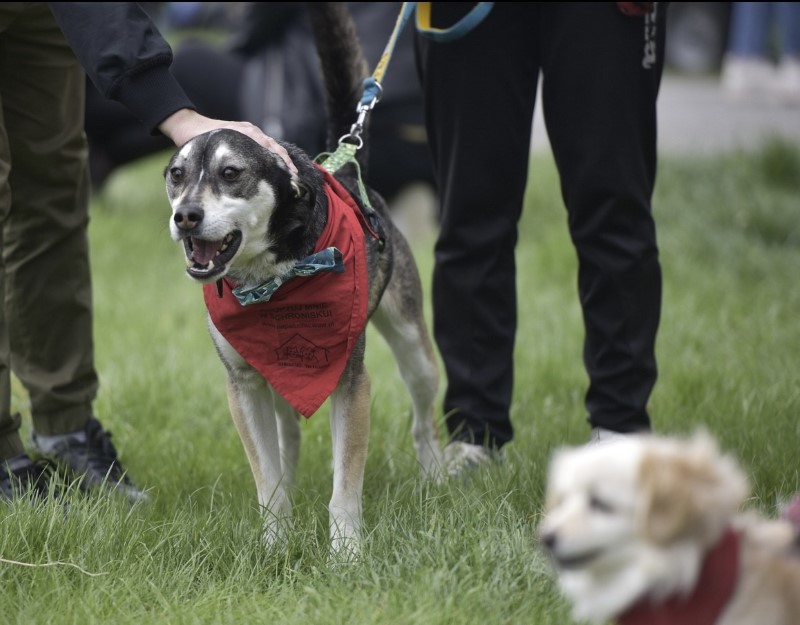
Why is understanding these behaviours so important?
Empathy and awareness of what the strategies discussed in this article are constitute key aspects of communicating with our friend and ensuring their comfort and safety. They also help to avoid behavioural problems. Here are a few key reasons why this is important:
- Ensuring the dog’s welfare:
- When we understand a dog’s behaviour, it is easier to notice its fear, suffering, pain or anxiety. Early recognition of such signals allows for quicker intervention, for example by adjusting the dog’s environment, appropriate veterinary care or behavioural help. Caring for the emotional and physical needs of the four-legged companion affects its overall health and satisfaction.
- Preventing behavioural problems:
- Dogs whose needs are not met may develop negative reactions such as aggression or fearfulness. If a dog’s owner is able to recognise why the dog reacts in a certain way (e.g. fear of strangers, fear aggression, some excess or deficit), they can introduce appropriate changes in their shared life.
- Strengthening the bond between us and the dog:
- Understanding body language (e.g. signals of stress, happiness, impatience) allows us to build a relationship with our pet based on mutual trust. A dog that knows its needs are understood and met will feel more comfortable and safe in our presence.
- Safety:
- Understanding in which situations a dog may feel threatened can help avoid dangerous situations. For example, a dog that shows signs of fear or aggression in the presence of children, other dogs or strangers may pose a risk if it does not receive support in a given situation and the environment is not appropriately modified. An owner who understands the causes of this behaviour can prevent problems and ensure safety.
- Improving dog training and education:
- Understanding a dog’s behaviour is crucial in the process of learning and socialisation. Knowing when an animal is ready to learn and when it is stressed or tired allows us to raise it responsibly.
- Meeting the dog’s natural needs:
- Species-specific needs – e.g. the need to explore, to sniff, for intraspecies contact – are key to maintaining welfare. When an owner understands why a dog performs certain actions (e.g. searching for food scraps), they can offer alternative activities that will be more appropriate, such as scent games.
Understanding a dog’s behaviour is the key to providing it with a happy, healthy and balanced life, which translates into a satisfying relationship between the pet and its carer. Every dog is different, and awareness of its unique needs and reactions makes it possible to better adjust its care to its character.
How can I positively influence a dog’s behaviour?
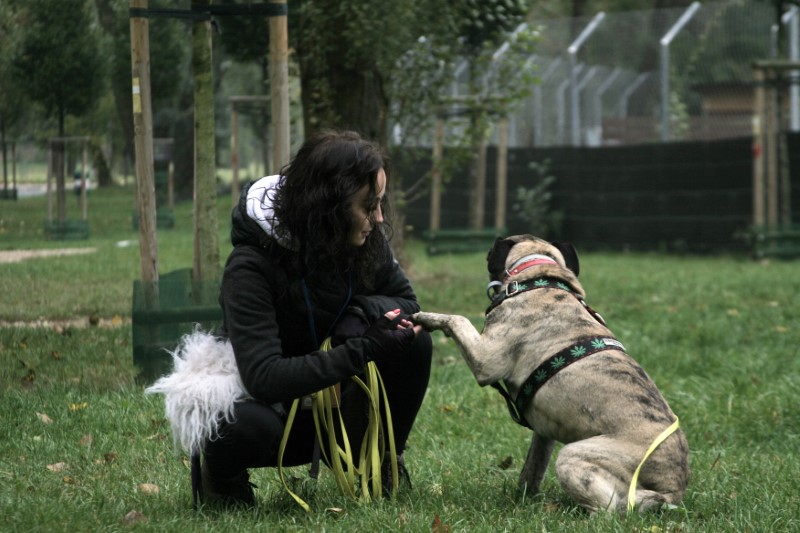
Learning canine communication is absolutely crucial for preventing bites, because it allows us to better understand a dog’s emotions and intentions, and to predict its reactions. Dogs do not use words to communicate, but knowledge of their body language allows us to understand them. If dog owners cannot read these signals, they may unknowingly create situations in which the optimal strategy is severely hindered and the consequence is aggression. Educating people is the foundation of bite prevention, as it can prevent misunderstandings through:
- Recognising warning signals
Early recognition of warning signals allows for intervention before a situation escalates into aggression. Examples of stress signals in dogs:
- Body stiffness: a dog that is stiff may be uneasy.
- Making sounds: growling, whining or barking may signal that the dog feels threatened.
- Freezing: a dog that freezes may feel threatened.
- Avoiding eye contact: if a dog avoids looking into the eyes and turns its head away, it may be a sign that it feels insecure and wants to avoid confrontation.
Understanding these signals allows for an appropriate response (e.g. changing the direction of the walk, moving away from a worrying situation) so that the dog has a chance to regulate itself emotionally.
- Adjusting one’s own behaviour
Knowing a dog’s body language, people can avoid actions that stress the animal or make it feel threatened. For example:
- Not entering the dog’s personal space if the dog gives off signals that it does not want interaction.
- Avoiding sudden movements: if a dog shows signs of anxiety or fear, sudden and fast movements may trigger a defensive reaction.
- Avoiding physical contact if the dog does not feel comfortable (e.g. avoids eye contact, turns away, yawns, moves away).
Sometimes, a dog may feel threatened due to inappropriate conditions (e.g. too many dogs in one place, noise, strangers nearby). If a person recognises the moment when the dog begins to feel stressed, they can avoid further worsening the situation by:
- Stopping for a moment to calm the dog,
- Changing the walking route if the dog becomes uneasy in the presence of other dogs,
- Increasing the distance from the stimulus that causes fear, to give the dog space to calm down.
- Gathering positive experiences with the environment
Proper understanding of dog communication allows for effective socialisation, which enables the dog to learn to function in our world.
- Understanding the causes of aggression
Dogs may react aggressively for various reasons, including:
- Fear and stress: owners who understand that aggression may stem from fear can help the dog feel safe instead of punishing it for aggression.
- Unmet needs: can cause significant frustration, leading to anger.
- Pain or bad experiences: if a dog reacts aggressively because of pain or traumatic experiences, it is important that the owner does not force the dog into interactions that may deepen them and seeks help from a specialist.
- Predicting a dog’s reactions to specific stimuli
Understanding how a dog reacts to specific situations (e.g. an unfamiliar dog approaching it or a loud noise) makes it possible to predict when the dog may feel threatened and respond appropriately in advance. Dog owners often do not realise that their dog may be uneasy or frightened, especially in new situations (e.g. in the presence of small children, other animals or strangers). Knowledge of canine communication allows the owner to manage the situation appropriately, which helps avoid accidental bites. Children who do not understand a dog’s signals may inadvertently provoke an aggressive reaction, for example by touching the dog in a way that causes it discomfort.
- Better quality of life
A dog that feels understood by its carer and knows it can rely on support lives in a more stable and safe environment. Education in this area makes it possible to build a strong bond based on trust, which improves the dog’s quality of life and reduces the risk of behavioural problems.
Learning canine communication is a fundamental element of bite prevention, successful adoptions or purchases of four-legged companions and our happy coexistence.
REFERENCES
Bracha, H. S. (2004). Freeze, flight, fight, fright, faint: Adaptationist perspectives on the Acute Stress Response Spectrum. CNS Spectrums, 9(9), 679–685. https://doi.org/10.1017/s1092852900001954
Coppinger, R., & Coppinger, L. (2002). Dogs: A new understanding of canine origin, behavior, and evolution. University of Chicago Press.
McCarty, R. (2016). The fight-or-flight response. Stress: Concepts, Cognition, Emotion, and Behavior, 33–37. https://doi.org/10.1016/b978-0-12-800951-2.00004-2
McCLOSKEY, L., & WALKER, M. (2000). Posttraumatic stress in children exposed to family violence and single-event trauma. Journal of the American Academy of Child & Adolescent Psychiatry, 39(1), 108–115. https://doi.org/10.1097/00004583-200001000-00023