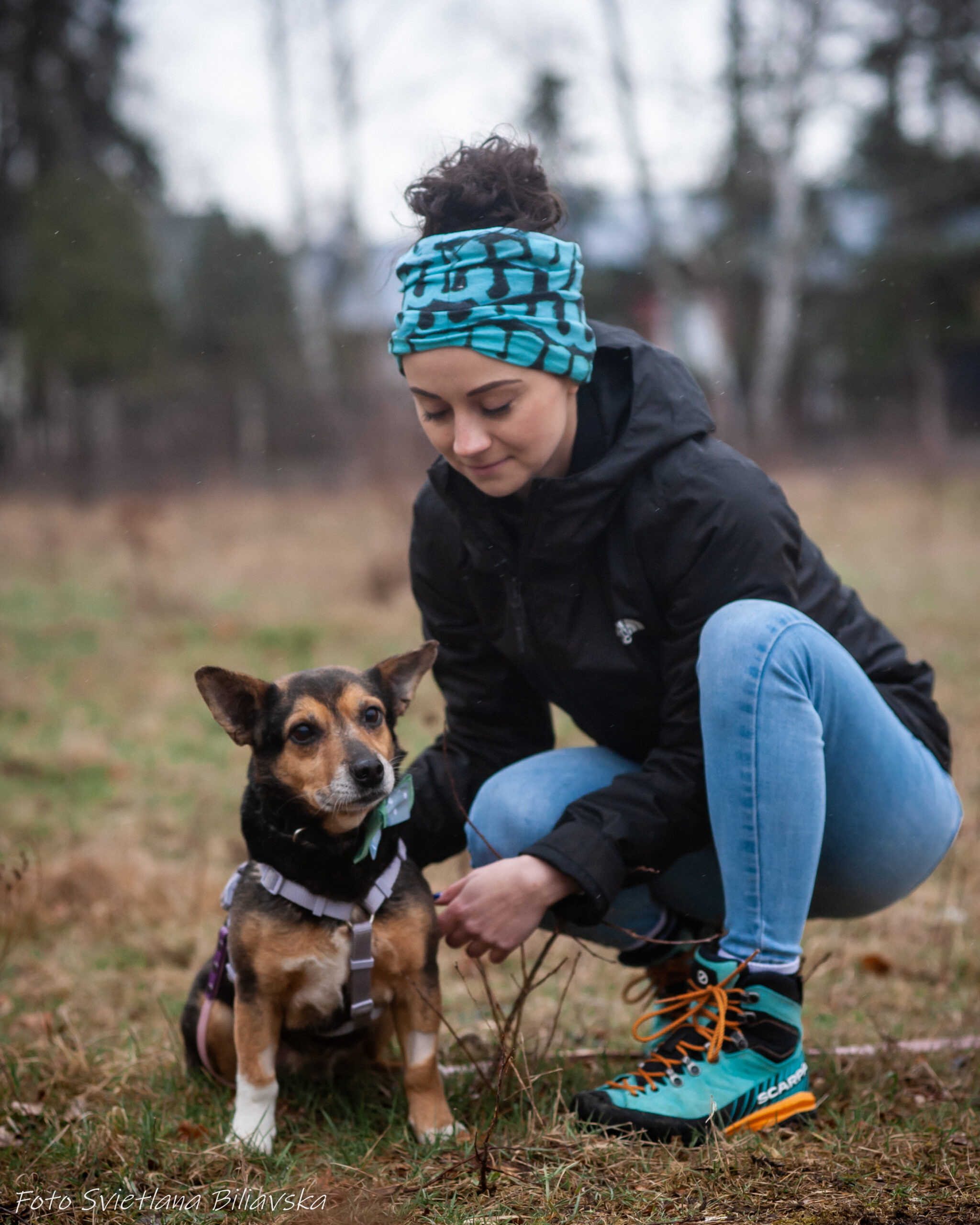
When analysing the behaviour of dogs or humans, we are highly likely to try to rationalise it, to find a ‘recipe’ that will allow us not necessarily to understand better, but at least to predict the future actions of others. According to the popular schema theory in cognitive psychology (Piaget, 1952), this is a natural mechanism aimed at increasing our sense of security and conserving mental resources: we tend to see the world through patterns, categorising new events and unfamiliar behaviours into existing ‘boxes’. From the idea of ontological dualism proposed by Descartes, to the standards of modern companies and corporations, our human world has long promoted the dualism of emotion and ‘logic’, favouring ‘rational’ explanations over those that take other factors into account (Dougherty & Drumheller, 2006).
It is therefore no surprise that we perceive our Canis familiaris through the lens of these socially ingrained tendencies. Yet, as psychology develops, we have become increasingly aware that our biology, emotions, thoughts, and behaviours are inextricably connected, and that dualism does not serve the effective understanding of the ‘human condition’ (Garces & Finkel, 2019). Perhaps it is time, then, to see in your dog a feeling, complex being and make a genuine effort to truly understand him?
Maladaptive coping mechanisms in dogs
In this section – as above – we will reflect on the multidimensional nature of both canine and human psychology. If you have ever decided to consult a specialist about your dog, you may have been told that some of your dog’s ways of coping with difficult situations might not be beneficial for him, for you, and/or for his surroundings. In other words – such behaviours are maladaptive, meaning they are not suited to the situation or environment.
So, where do they come from? Perhaps your dog lived in different conditions before he came to you – for example, in a shelter, semi-wild, or in a place where he was mistreated, etc. Such an environment may have encouraged the development of aggressive behaviours or strong fearfulness, as these responses helped him to survive. Unfortunately, these coping strategies do not make it easier for the dog to build a relationship with his next carer or to live in an urban setting. On the other hand, if you have a pet from a good breeder who nevertheless displays undesirable behaviours, it may be that his socialisation did not proceed as it should, and he simply does not know how to function among other dogs or people. It is also possible that something in your own behaviour, or some random traumatic event, has caused your dog to lose full trust in his handler. He may be anxious and trying to invent his own ‘life manual’ – not necessarily an effective one, since his understanding of the human world is comparable to that of a very small child.
If you still feel that all of this sounds frustratingly vague, let’s look at the issue from a different perspective. Whose? Ours. We all know the concept of procrastination, and each of us engages in it from time to time. But I think we all know someone (or perhaps we are that person ourselves) who habitually puts off important tasks until the last minute, even though it always causes problems. When that stressed person is chasing a deadline in the middle of the night, asking themselves why they’ve done it again, they probably can’t come up with a logical answer. Chronic procrastination can lead to professional failures, interpersonal issues, and suffering – yet it is often the way we deal with stress (Rist et al., 2023). Does it make sense? Rationally – not really. But if we take into account emotions, past experiences, our (in)ability to handle pressure because no one taught us consistency, or potential perfectionism as an expression of fear of failure, we can begin to UNDERSTAND this maladaptive method.
In the following parts of the article, I will aim to outline examples of non-obvious actions our four-legged friends may choose to cope with fear, and compare them with their human equivalents – which will make them easier to comprehend.
Reactivity to stimuli
Let us imagine the following scene. We are walking along the pavement and see a carer with their dog ahead of us. The lead is taut, the dog is showing signs of stress – reacting to the sight of another dog approaching from the opposite direction, even though that dog is behaving calmly. As the distance shrinks, the first dog gets more tense. The collar almost chokes him as he pulls towards the ‘opponent’, even though the owner is trying to move in the opposite direction. As they pass each other, the barking begins, and the dog we are observing keeps trying to close in on the other dog. Such an interaction is, unfortunately, a common sight during city walks.
Dogs that respond excessively (often in an offensive way) to various stimuli – even everyday ones such as other animals, passers-by, cars, or children on scooters – are described as ‘reactive’. It is an umbrella term for dogs that quickly enter a high emotional state and cannot cope with it in any way other than through an emotional ‘outburst’, while habituation to the ‘scary things’ does not work or even causes greater sensitivity. Stereotypically, we think of reactivity in the context of behaviours such as barking, growling, pulling, and so on, but by definition, it also refers to over-arousal in ‘positive’ situations. This might include difficulties in calming down after we return home, which, over time, results in stress.
Alright, but where is the mystery here? The dog is reactive; for example, he sees a person dressed unusually, gets angry, and no command or toy can bring the lead back to slack. He is naughty and disobedient. Makes sense, right? Well, not exactly. (Excessive) reactivity to stimuli usually stems from fear, not from an aggressive temperament or the often-assumed confidence – ‘he lunges because he’s brave’. It is quite the opposite: the dog behaves in a troublesome way because he is afraid. Of course, it may be the case that a prolonged lack of resources to cope with fear leads to frustration, which in turn causes anger, but at the root, we are dealing with a stressor.
But why would a frightened animal lunge towards what it fears, instead of running away? It seems illogical! One reason I have already mentioned is the lack of any other idea for dealing with a difficult situation. The human factor also plays a significant role. If we cannot read a dog’s signals early enough, we might unknowingly push the dog into situations he cannot handle – for example, we do not increase the distance from objects that overwhelm our pet, because to us they are everyday and normal. Dogs then learn that they have no choice but to confront what they fear, so they want to ‘get it over with’ and pull towards the ‘scary thing’, then behave offensively.
If this explanation still sounds implausible – provoking a confrontation with something one fears, where’s the logic in that! – let’s imagine the following situation: you have a disagreement with a colleague and are unsure who is right. You are very afraid it will turn into an argument your boss will find out about. You know that calmly receiving negative feedback is not your strength, so you spend half the night thinking about the difficult conversation ahead. You cannot avoid it, because you have to go to work. Tired and tense, you arrive at the office, and at the sight of your colleague, you feel the stress rising. It becomes unbearable, so you decide to ‘get the row over with’ and start the conversation sharply, which immediately escalates. Within an hour, your boss calls you in, and you are flooded with emotion, precisely because this is what you were so afraid of. When asked what happened, you start explaining yourself nervously and defensively, even though your boss was not angry in the first place. The conversation goes badly. See the analogy? Let’s take it further. Imagine you impulsively planned a weekend trip with friends, even though you had promised your partner to spend it together. You expect them to be angry and fear a big argument. Cortisol (the stress hormone) makes it hard for you to approach the topic calmly, and as soon as your partner comes home, you nervously start the conversation by bringing up the time they cancelled plans and sharply say they have no right to be angry! Your partner, surprised by the attack, does start arguing – even though they were not angry at all – and the argument you wanted so much to avoid takes off in full swing.
A lack of tools for coping with tension and fear (whether justified or not) and the belief that it is better to ‘get it over with’ because the ‘worst-case scenario’ will happen anyway is something that sabotages even the best of intentions. Let us add to this the fact that a dog has far less capacity for mentalisation – that is, imagining the state of others (for example, ‘is that person driving the car definitely not mad and won’t run me over?’) – as well as a limited understanding of the rules of the human world. He has little agency or decision-making power – we choose the walking route and hold the lead that restricts his movements for reasons he cannot comprehend. Then it becomes easier to imagine that our friend is provoking a row because he is trying to regain a minimum sense of control and relief – not because he is naughty or wants to be the ‘alpha’.

Fear-based aggression
Fear-based aggression works in a similar way. Why does a frightened dog attack instead of retreating and hiding in its bed? You surely know the saying, ‘the best defence is a good offence’.
Fighting is one of the five known survival strategies, and for some animals – just like for some humans – it comes more automatically in a threatening situation than running away. It will hardly come as a surprise if I say that, during a mugging in a dark alley, one person might be frozen in fear, another might start to run, and yet another might instinctively strike back at the attacker. We can learn to handle threatening situations differently from what our nervous system dictates, but it requires immense effort and conscious intent.
A dog does not need a self-defence course to learn how to cope with frightening circumstances in a way other than by attacking – but it does need a great deal of understanding, empathy, and commitment from its carer to grasp the causes of such behaviour, to avoid triggers, and to observe canine communication carefully in order to build a sense of safety. Aggressive reactions in a dog should never be dismissed, whether they are directed at members of the ‘human pack’ or towards other people or animals. It is worth consulting a behaviourist and/or animal psychologist who understands that aggression usually stems from fear.
Flirt in dogs – a survival strategy
Since we are already talking about survival strategies, it is worth mentioning that canine flirtation is the part of the 5F response (fight, flight, freeze, fawn, faint) that evokes the most emotion (and the most difficulty!). Imagine a puppy approached by an adult female dog who is irritated by its antics. You can see that lowered body posture, the appeasing gestures, and the little one almost wriggling about, trying to soothe its mother’s anger. In the next article, we will look at what happens when such a fear-based reaction remains with a dog into adulthood, how to distinguish flirtation (because that is exactly what canine flirt is!) from genuine joy, and what may occur if we misinterpret this behaviour.

Dogs and humans – we are a bit alike!
We are a bit alike, aren’t we? Our communication with the world around us may differ, and we might not enjoy the same things (urinating outdoors and perfumes made from dead fish are probably not for us), but we are all highly developed, complex beings, and our behaviours are the result of biology, genetics, experiences, and the emotions we feel at a given moment. It is worth being empathetic when assessing canine behaviour and remembering that a dog can sense our impatience and displeasure.
ADOPTION CORNER
Regardless of whether you choose adoption or a dog from a breeder, make your choice consciously. Mutual compatibility is the key to shared happiness. If you decide to choose a mongrel, visit the websites of the ‘Na Paluchu’ shelter (Schronisko Na Paluchu) and the ‘Friends of Paluch’ foundation (Fundacja Przyjaciele Palucha) to find out how to adopt responsibly.
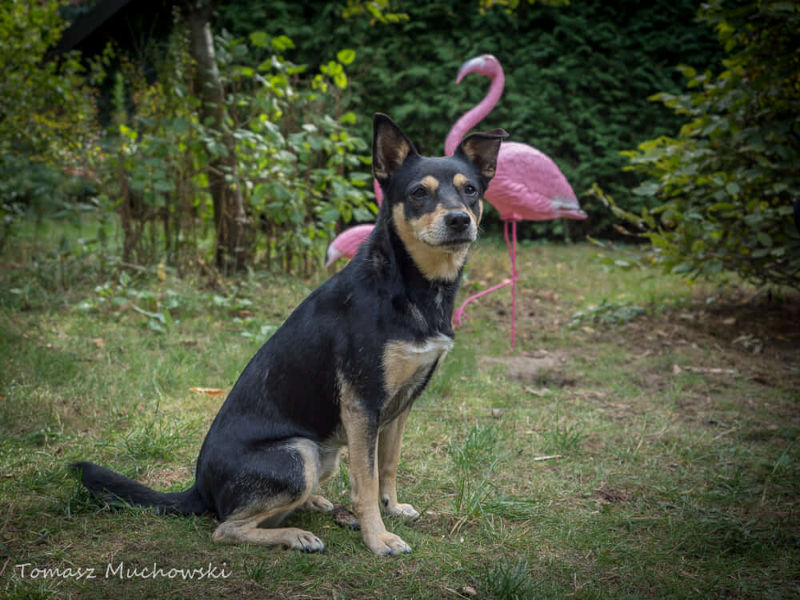
Do you live in the city and, although you don’t mind taking walks in the forest, you also enjoy stopping for a takeaway flat white at your favourite café during a stroll? Are you looking for a canine companion but not keen on raising a little, bitey piranha that constantly demands your attention – a.k.a. a puppy? Do you think your preferences can’t be reconciled with adopting a dog? You’re wrong! Meet Stejsi, a ward of the ‘Friends of Paluch’ foundation, who has been waiting for her home for almost 3 years (!). Stejsi is a city girl – she’s not afraid of traffic or car rides, and at home she doesn’t bark excessively, doesn’t destroy things, and can beautifully entertain herself. Sounds like an ideal dog? Well, she basically is! 😉 She’s also a sensitive girl, so she’ll be happiest alongside a calm person who doesn’t host crowds of guests every weekend – but honestly, with such a friend by your side, do you need anyone else? Contact the foundation to find out for yourself. You won’t regret it 😀
REFERENCES
Coppinger, R., & Coppinger, L. (2002). Dogs: A new understanding of canine origin, behavior, and evolution. University of Chicago Press.
Dougherty, D. S., & Drumheller, K. (2006). Sensemaking and emotions in organizations: Accounting for emotions in a rational(ized) context. Communication Studies, 57(2), 215–238. https://doi.org/10.1080/10510970600667030
Garcés, M. (2019a). Emotional theory of rationality. Neuroscience Letters, 500. https://doi.org/10.1016/j.neulet.2011.05.129
Garcés, M. (2019b). Emotional theory of rationality. Neuroscience Letters, 500. https://doi.org/10.1016/j.neulet.2011.05.129
Mueller, S. (2023). Hunting together. Predation Substitute Training.
Rist, F., Engberding, M., Hoecker, A., Wolf-Lettmann, J., & Fischbach, E.-M. (2023). Diagnostic criteria to differentiate pathological procrastinators from common delayers: A re-analysis. Frontiers in Psychology, 14. https://doi.org/10.3389/fpsyg.2023.1147401
Shahghasemi, E. (2017). Cultural schema theory. The International Encyclopedia of Intercultural Communication, 1–9. https://doi.org/10.1002/9781118783665.ieicc0019