Have a look at these tips to learn the basic principles of raising a puppy. In short: where to start so that our little rascal grows into a well-balanced companion in our lives. In the ‘From the behaviourist Aga’s perspective’ section, you’ll find related articles that will help you become a conscious and responsible guardian.
A puppy from a breeder or from a shelter
First of all, let’s debunk the myth that ‘a puppy is a blank slate and will be whatever you make of it’. Just like in humans, a dog’s development is influenced by a range of genetic factors – tendencies, breed traits, and elements of the neuroanatomy and biochemistry of the nervous system – inherited from its ancestors; prenatal factors – such as the mother’s nutrition, illnesses, and stress levels during pregnancy; perinatal factors – the conditions of birth (duration, oxygenation, complications), quality of maternal care, the mother’s diet while nursing, and the composition of her milk; as well as early-life experiences. Those early experiences are, of course, fundamental – but did you know that because stress hormones have a scent perceptible to dogs, even a blind litter can learn to associate the smell of a human or another animal with danger if the mother feels stressed and releases adrenaline and cortisol when they are present?
To sum up: who your pet becomes as an adult is far more complex than just how they are raised after two months of age. That’s why it’s so important to make a conscious choice when selecting a responsible breeder or a trusted organisation, and to meet the puppies at least once (whether in a breeding facility, a foundation, or a shelter) to get to know their individual personalities. If you’re unsure what to look for, I recommend reading the latest article on socialisation and arranging a so-called pre-adoption or pre-purchase consultation with a behaviourist.
Patience and consistency are essential
The advice about patience refers to your new family member. However, the person who needs to be consistent is, above all, you. If you thought this meant being strict with your puppy – that’s not quite right. Of course, that’s also important, since we have to be predictable for our dogs so they can feel safe with us. But to achieve that, we first need to be disciplined with ourselves. If you’ve decided to get up once in the middle of the night and once early in the morning to give your puppy the chance to relieve themselves outdoors instead of indoors, then stick to it – no excuses. If your puppy school trainer advised you to repeat exercises daily between classes, dedicate at least 5 minutes a day to doing so. The determination to act as your puppy’s advocate and to set boundaries with strangers who want to touch them is crucial – but it requires consistency and must not fade when faced with, for example, elderly people or children. So remember: patience (towards your puppy) and consistency (towards yourself) are the key elements.
Puppy socialisation at home
Before we move on to what and how things should be done, I have to first mention what you should absolutely NOT do. During the first weeks of having a new family member, avoid inviting too many people into your home, and during the first few days, you should refrain from having guests altogether. It’s natural that you might want to share your happiness with loved ones, but the process of introducing new people into your home should be gradual, and you have to be ready to respond firmly if your pet has had enough.
Set boundaries
First and foremost, set them for yourself and your household members – for example, the dog should be left alone when eating and sleeping, even if it’s just to admire how adorable they are (and they surely are!).
When it comes to your puppy, think in advance about what limitations an adult dog will have in your home. If the adult dog won’t be allowed on the bed, don’t let the puppy do it either. The rules of raising your dog shouldn’t suddenly change as your pet matures.
If you forbid your dog from doing something, always give them an alternative. A ban alone is not enough – it’s necessary to show what behaviour is appropriate instead. For example, if a puppy is chewing on a chair leg, they probably won’t stop just because you say ‘NO’, but they’ll happily redirect themselves to a toy you offer. You might have to make a bit of an effort to make the toy appealing (for example, by running away with it around the house), but this will teach your puppy what behaviour you accept instead of creating frustration through prohibitions alone.
Additionally, if your puppy is not supposed to do something (for example, jump on the sofa), try to reward them when they do the opposite (for example, when they are near the sofa but with all four paws on the floor). That is: your pup sits, lies, or stands next to the sofa without jumping up, so a treat lands on the floor (this is important – not from your hand) near their paws, accompanied by an enthusiastic ‘off, good!’. Training rules should be based on teaching behaviours that please you, rather than unteaching unwanted ones. Good habits deserve treats!
Get your puppy used to sounds and gestures
Pay special attention to elements of everyday life that may scare or unsettle your puppy. These are great opportunities for your little one to overcome fears with your support. This will positively affect your relationship. If something happens that startles them, encourage your puppy gently as they get used to it – praise them a lot, express pride and satisfaction. This will help your dog gain confidence and openness to new experiences.
Toilet training
Toilet training is measured in months, not weeks. It’s perfectly normal for a few-month-old puppy to have accidents indoors. Focus on taking your dog out as often as possible – definitely after every meal, nap, drink, and playtime. If they start to relieve themselves indoors, ignore it and don’t get upset. Make sure your pup gets a treat and praise every time they go outside – they’ll soon learn that it’s worth it!
Playing with your puppy at home
Puppyhood is a time of madness and play, but there’s no need to panic if, after arriving in a new home, your four-legged friend is initially withdrawn. At that time, you should provide your dog with time and calm until they understand that they are safe – after all, their whole world has just changed. To begin with, it’s better to buy more inexpensive toys, as puppies get bored quickly, and rotate them by hiding ‘old’ ones for a while so that when they reappear, they feel ‘new’ again. I don’t recommend playing with your hands or feet – those tiny teeth are like needles, and the puppy won’t understand why sometimes they’re allowed to nip you and sometimes not.
Puppy socialisation with the environment
For more information on how to socialise your dog with other dogs and people, have a look at the previous article.
Learning to walk on a lead
First of all, get rid of any expectations that your puppy will walk calmly on a loose lead at the start of your journey together. Developing calm behaviour while using a tool that is completely unfamiliar to a dog will take some time.
Instead, focus on the lead itself and the associations you build with it. It should never be a tool of force – a young puppy must not be pulled on the lead, let alone jerked. If the lead only appears when things are ‘difficult or scary’ (by a busy road, when you’re in a hurry, or when the puppy is frightened), it will quickly become associated with a lack of safety.
Try to balance using the lead in situations where the level of environmental difficulty requires control for your dog’s safety with using it during playtime, enjoyable activities, and trips outside the city. Handle the lead as if it weren’t there – wherever possible, follow your dog’s lead, allow for stops, five-minute sniffing sessions at one spot, and wandering off the path. Let the lead be something neutral that connects you, not a tool used to force obedience.
Remember: your dog has the right to walk more slowly or more quickly than you’d like, and the right to stand still and take in the surroundings. Although it requires patience, this is a positive behaviour.
Playing with a young puppy outdoors
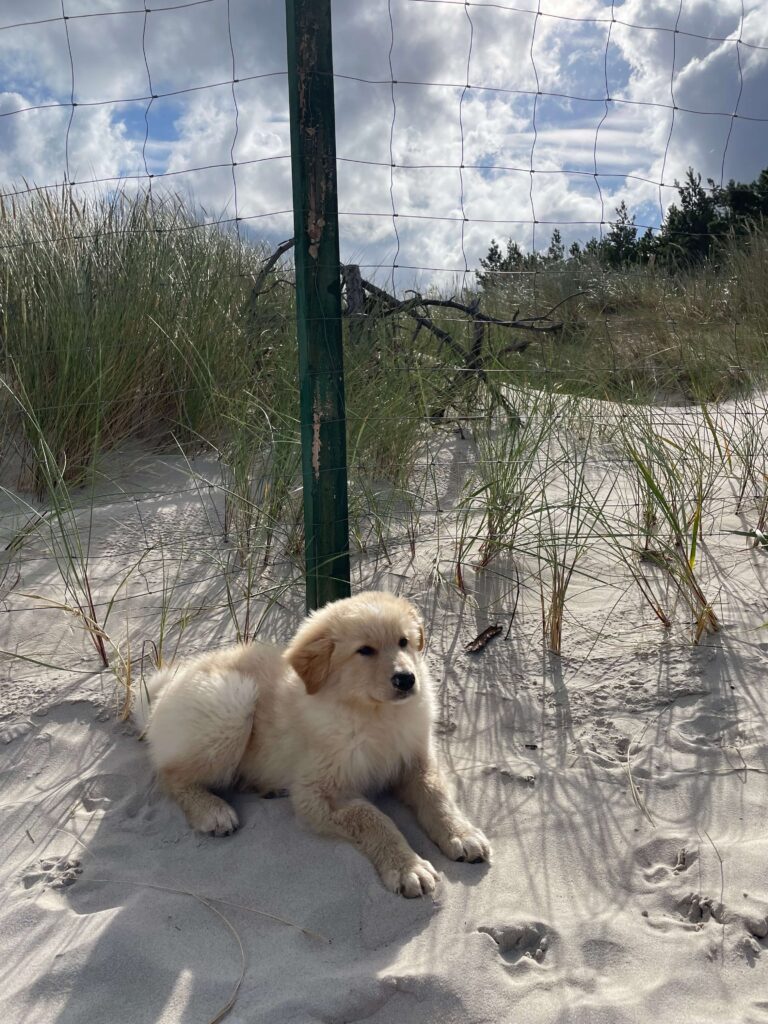
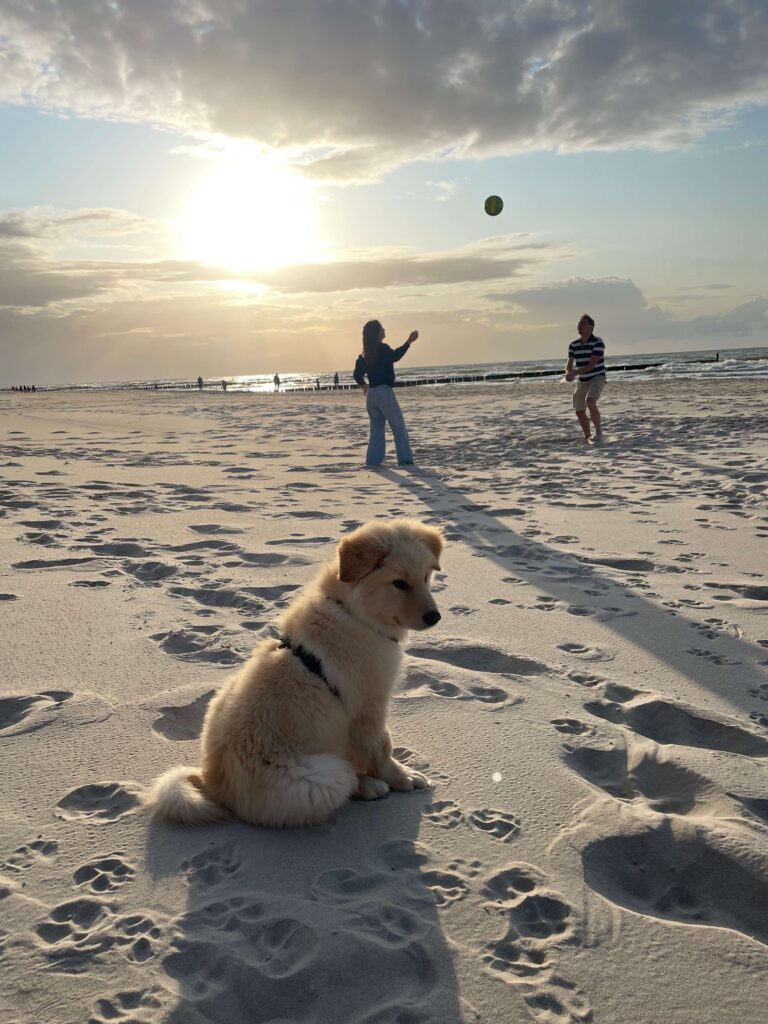
It may be that before your dog becomes more confident outside, they won’t yet be ready to play outdoors – and there’s nothing wrong with that. During walks with your little one, focus on showing them the world and nature, rather than putting pressure on play or training.
Puppy training and education
Learning basic commands
When introducing the first training sessions, it’s important to remember that a puppy is like a small child – it cannot focus for long periods. Therefore, training sessions should be short, lasting from a few to a maximum of several minutes. It’s better to do a few short intervals throughout the day than to try training for an hour. Treats should be attractive enough to motivate your puppy, but not so exciting that they ‘lose their head’ from enthusiasm. I recommend using the method of microsteps so the puppy has a chance to understand what is being asked of them, but I would definitely advise going to a trainer or a reputable puppy school where someone can teach you how to teach your dog. It’s not as simple as it seems!
Positive reinforcement
We should never punish our dogs for failures – it means we haven’t explained clearly enough what we expect from them. As I mentioned in my first article, dogs show similar attachment styles towards their guardians as human children do towards their parents, so if we punish them or (which I consider absolutely unacceptable) hurt them physically, they will never have a genuine, deep and safe relationship with us. Avoid places and people who use so-called ‘aversive methods’, which include physical punishment in training, because obedient does not necessarily mean happy…
Raising a puppy – things to remember
Biting – a natural way of exploring the world
Puppies, much like human children, explore the world by putting everything into their mouths, and this, apart from teething, is one of the reasons they nip and bite. However, if this behaviour is directed towards the owner’s hands, it may be the only way your puppy knows how to say, ‘I don’t want to be touched/petted/picked up!’ Check whether the problem decreases when you respect this request from your dog.
Great curiosity about the world
The fact that your puppy is curious is a natural stage of development, but it’s also something that can greatly support the socialisation process. Encouraging safe exploration of the world is a great way to raise a confident, open companion.
Should a puppy stay in quarantine until the end of the vaccination cycle?
For the answer to this frequently asked question, please refer to the previous article on socialisation.
Adoption Corner
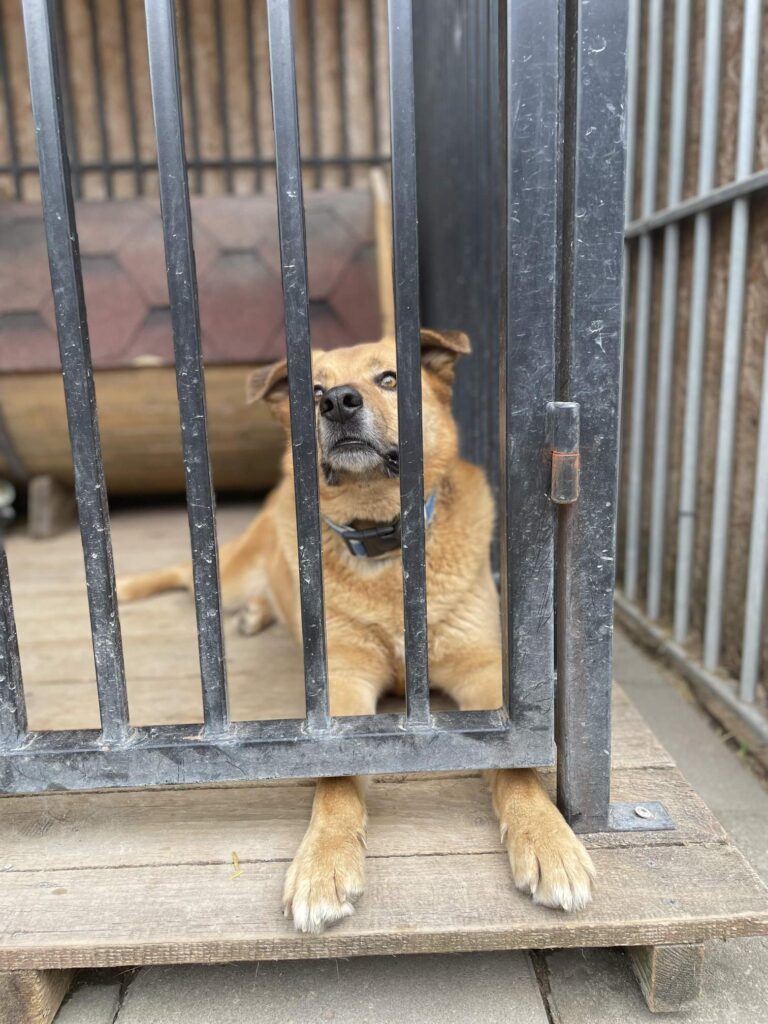
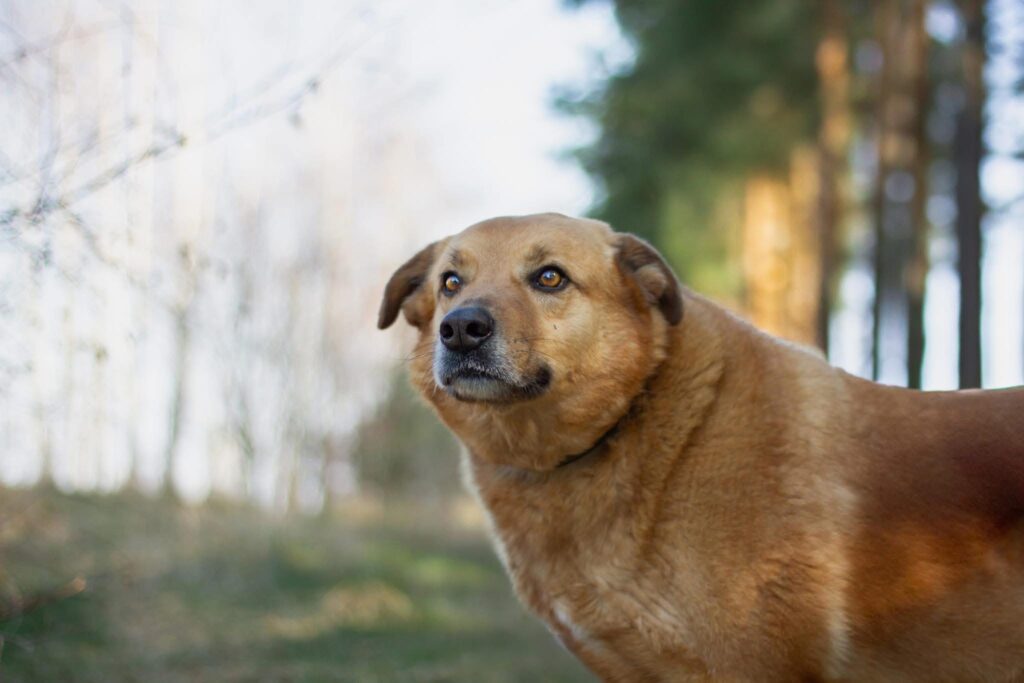
Today, I would like to introduce an absolutely exceptional golden dog with golden eyes. Meet Omlet! Personally, I believe Omlet should be a dream come true for many people, and I truly cannot understand why, after spending 3 years on a chain, he has already been waiting 5 long years in the shelter… Omlet is a medium-sized, neutered male who will enchant you with his golden gaze, calm nature, and love for unhurried but long walks through fields and forests. It takes a little time to earn his trust (treats will help!), but this gentle dog, who gets along well with other dogs, will reward his future owner’s patience and commitment a hundredfold. Omlet is in urgent need of a home – he is the longest-waiting dog at the ‘Cztery Łapy Żuromin’ Association. Will he ever get the chance to discover what a real home is? If you would like to adopt Omlet, find the ‘Cztery Łapy Żuromin’ Association (Stowarzyszenie Cztery Łapy Żuromin) on Facebook or Instagram (@cztery_lapy_zuromin) or call Omlet’s volunteer (500 734 564).